Rule 2 of 6
Curtain Drop and Width
A common rule of thumb hangs the rod close to the ceiling, buys the panel long enough to reach the floor from there, and puts about twice as much flat fabric across the window as the width being covered.
- 63 inShort panel in this catalogStated on the listing
- 84 inLong panel in this catalogStated on the listing
- 92 inRod just under an 8 ft ceilingFrom the rule: Curtain Drop and Width
The rule
A common rule of thumb hangs the rod close to the ceiling, buys the panel long enough to reach the floor from there, and puts about twice as much flat fabric across the window as the width being covered.
This is a common rule of thumb out of decorating practice. It is not a standard, it is not a requirement, and nobody publishes it as one. What follows is where the number comes from, so you can disagree with it on the arithmetic rather than on taste.
The measurement it needs
Rod top to floor in inches, and the span you want covered, window plus the wall on each side.
How to take it: Measure the Window
The arithmetic
5 steps, and each one is a number you can check.
- Length first. Measure from the top of the rod to the floor. Not from the window frame, and not from the sill — from the rod, because that is where the fabric starts.
- Subtract the height the header adds above the fabric. A grommet hangs the panel a little below the rod; rings and hooks hang it lower still. Two inches is a reasonable working figure for a grommet, more for rings.
- Decide where the hem goes. Just clear of the floor is about 1/2 in of air. Breaking on the floor is about 1 in of extra length. Pooling is 2 to 4 in extra and is a decision about how the room is cleaned, not about how it looks.
- Width next. Measure the span you want covered — usually the window plus 4 to 10 in of wall on each side, so the open panels sit off the glass. Double that span. That doubled number is the total flat width of fabric you need.
- Divide by the number of panels. Two panels covering a 52 in span want roughly 104 in of flat fabric between them, so about 52 in per panel.
Where the catalog falls short
Two drops only: a long one and a short one. Five of the ten listings state a panel width, and the widths that are stated cluster into a narrow band.
10 of 10 listings state a drop, from 63 in to 84 in.
There is nothing here between the two drops, and nothing above the longer one. A rod hung near a 9 ft ceiling wants a panel around 105 in, and this catalog stops well short of that. Half the listings state no panel width at all, which means the width half of the arithmetic simply cannot be done for them. We will not estimate a width for a listing that does not give one.
- Listings
- 10
- State a figure
- 10
- Smallest stated
- 63 in
- Largest stated
- 84 in
Three things to keep in view
- Do not place a crib or climbable furniture at a window; cords on window coverings are a strangulation risk to young children.
- Keep panels clear of heaters, radiators, fireplaces and open flame.
- 100% blackout describes the fabric. Light still arrives at the edges of any panel.
Sizes in the catalog this rule can be applied to
5 listings from Curtain Panels whose stated figure can be put against the arithmetic above. Whether any of them suits your room is a question this page cannot answer, because it depends on numbers only you have.
Links to Amazon on this page are affiliate links. If you buy through one we may earn a commission, at no cost to you. It changes nothing about the numbers below, which come from the listings.
52 in wide, grommet
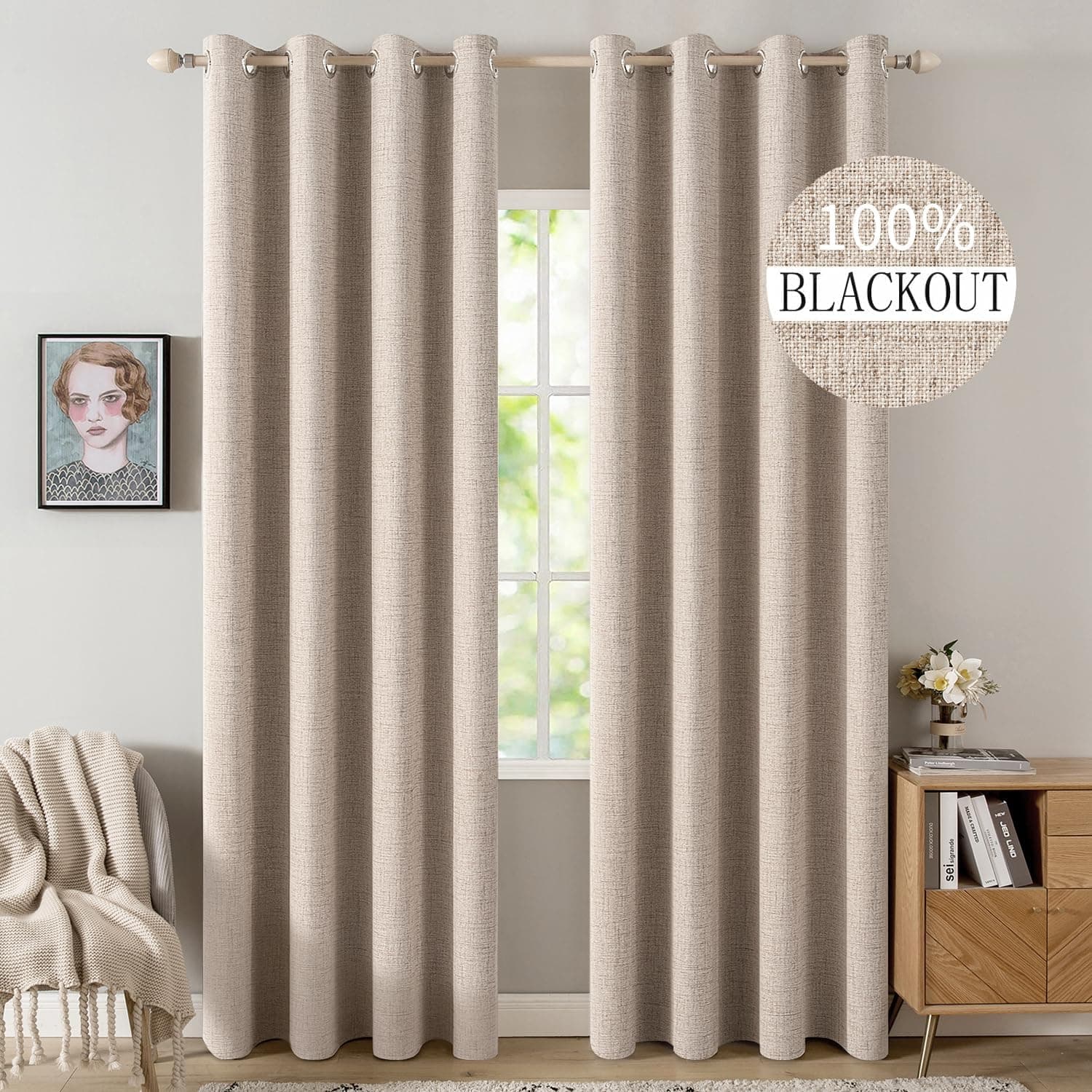
MIULEE Blackout Linen Curtains, 52 x 84 in
The listing states 52 by 84 in with a grommet top. One other panel here states the same 52 in width.
Fifty-two by eighty-four inches, which is the combination this catalog is best at: the long drop and the wider of the two panel widths on offer. Two panels at 52 in gives 104 in of flat fabric, and a grommet header gathers that down to something like 60 to 70 in of covered width. The listing states 100% blackout, which is the seller’s phrase for the fabric and says nothing about the gap at the edges.
- The listing states
- 100% blackout, thermal insulation, a grommet top, a linen texture and 2 panels.
- Best for
- A rod-to-floor drop close to 84 in with a window up to about 50 in wide.
What works
- Eighty-four inches of drop, the longer of the two lengths this catalog carries.
- Fifty-two inches per panel, the wider of the two stated widths.
- A grommet top, which slides and stacks more easily than a rod pocket.
- A linen texture, per the listing, which hangs with more weight than a flat weave.
What does not
- 100% blackout describes the fabric, and light still arrives around the sides and over the top of any panel.
- The listing states no fabric weight, so the fall of the panel is unknown.
- Thermal insulation is stated without any figure attached to it.
Only back tab or rod pocket
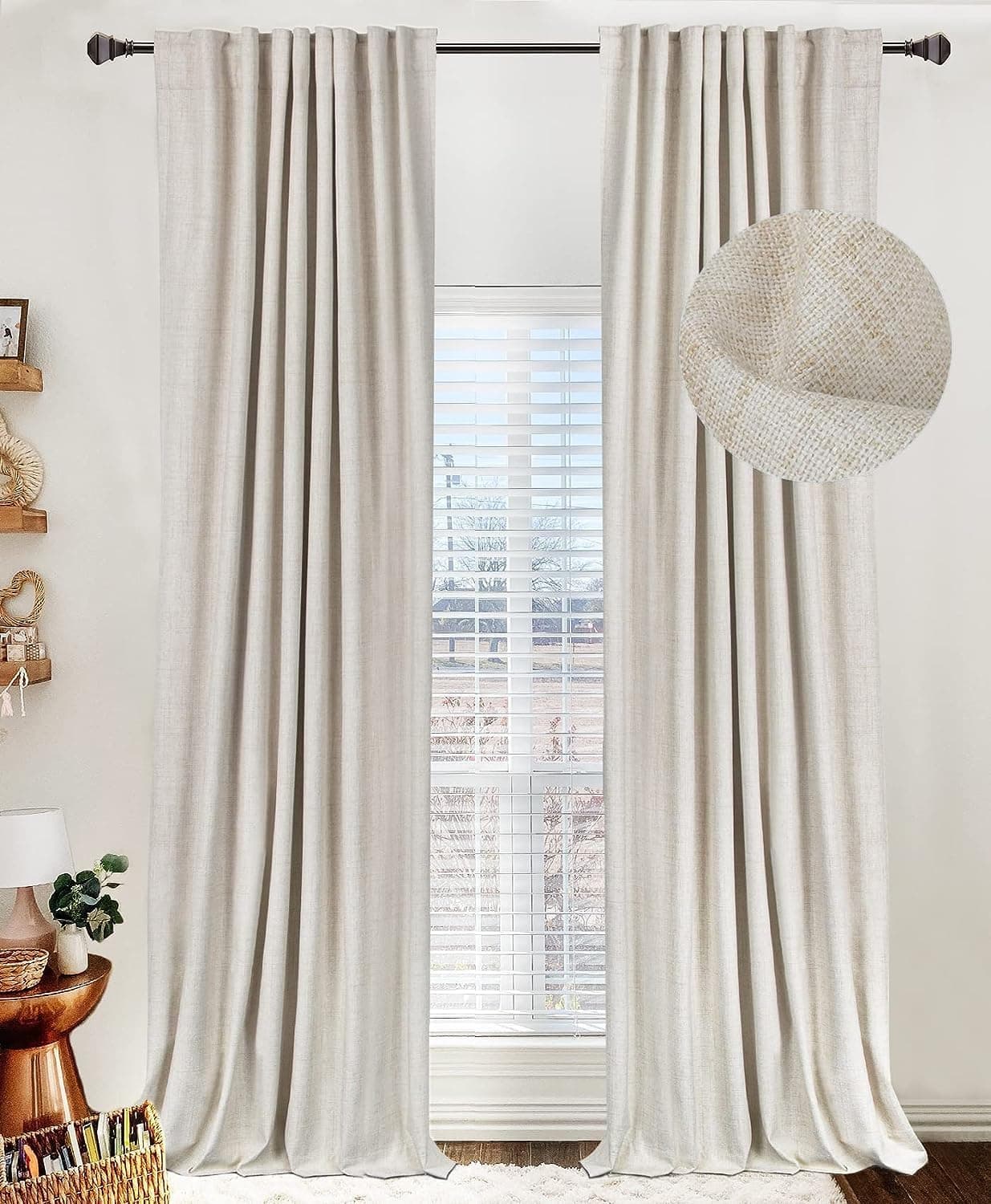
Linen Total Blackout Curtains, 50 x 84 in
The only panel here whose listing states both a back tab and a rod pocket header on the same product.
The only panel here whose listing offers two headers in one product: back tab or rod pocket. That matters more than it sounds, because a back tab hangs the fabric in front of the rod and a rod pocket gathers it onto the rod, and the two give different stack backs. Fifty by eighty-four inches, in a linen texture.
- The listing states
- 100% blackout, a linen texture, a back tab or rod pocket header, thermal insulation and 2 panels.
- Best for
- A rod near the ceiling where the header should not show.
What works
- Two header options in one panel, which no other listing here offers.
- Eighty-four inches of drop with 50 in of width per panel.
- A back tab hides the rod, which suits a rod mounted close to the ceiling.
- A linen texture, per the listing.
What does not
- 100% blackout is the seller’s phrase; light arrives at the edges of any panel regardless of the fabric.
- A rod pocket does not slide well, so daily opening favors the back tab.
- No fabric weight is stated.
Only stated certification
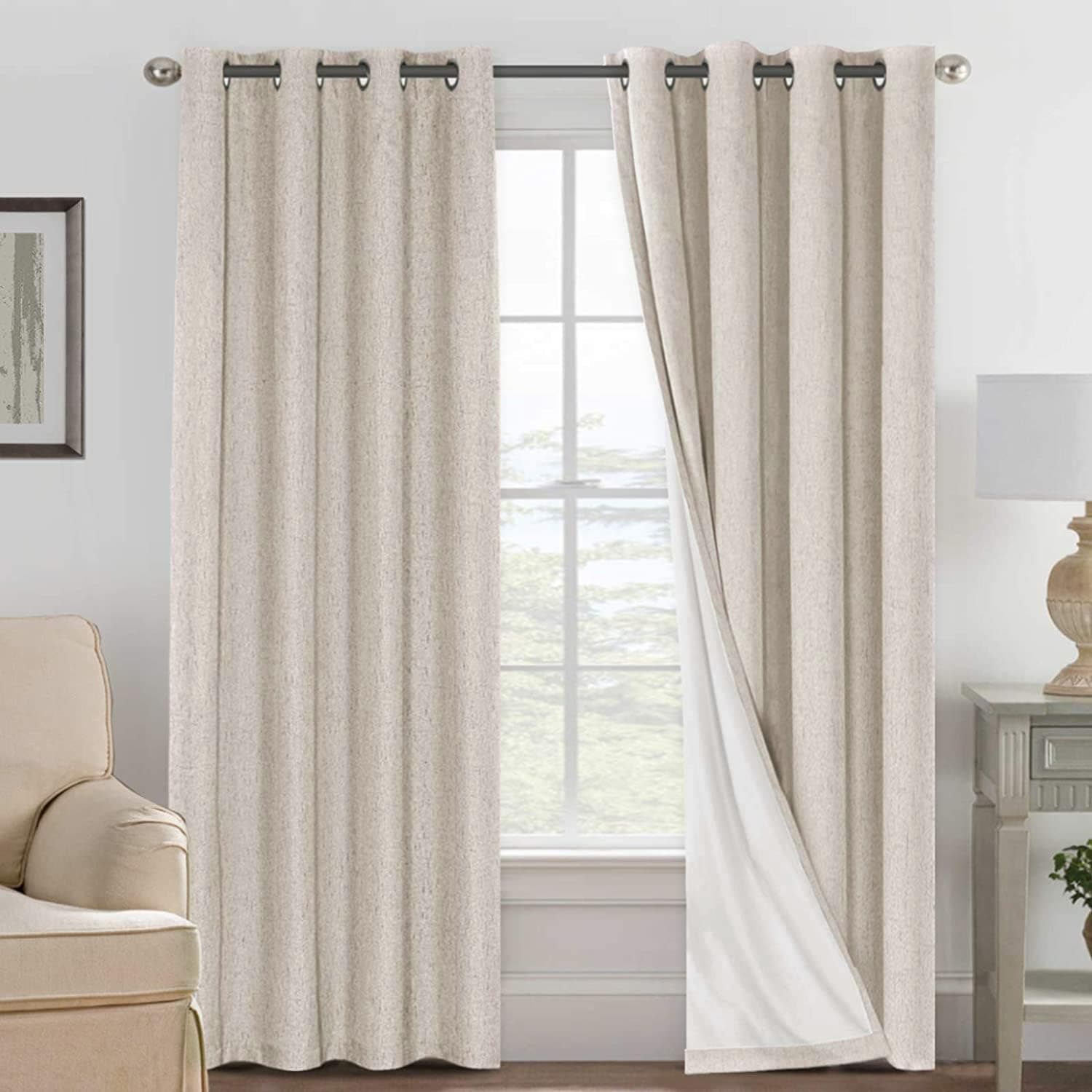
H.VERSAILTEX Blackout Linen Curtains, 84 in
The only curtain listing here that states a certification. GRS is the seller’s claim.
The only panel here whose listing states a certification of any kind, and the only one that describes a separate white liner rather than a single fabric. A liner is what makes a linen-look panel block light, and it is also what makes it hang heavier. Eighty-four inches of drop; the listing states no panel width.
- The listing states
- 100% blackout, a white liner, a grommet top and GRS certification.
- Best for
- An 84 in drop where a stated liner is the deciding feature.
What works
- A white liner is stated, so the light blocking is a construction rather than a coating.
- GRS certification is stated, which no other panel here states.
- Eighty-four inches of drop.
- A white liner faces the street, which keeps the outside of the house consistent.
What does not
- No panel width is stated, so the covered width cannot be worked out.
- 100% blackout remains the seller’s phrase, and edge light is a matter of geometry.
- A lined panel is heavier, and the listing does not state a weight.
The 63 in NICETOWN
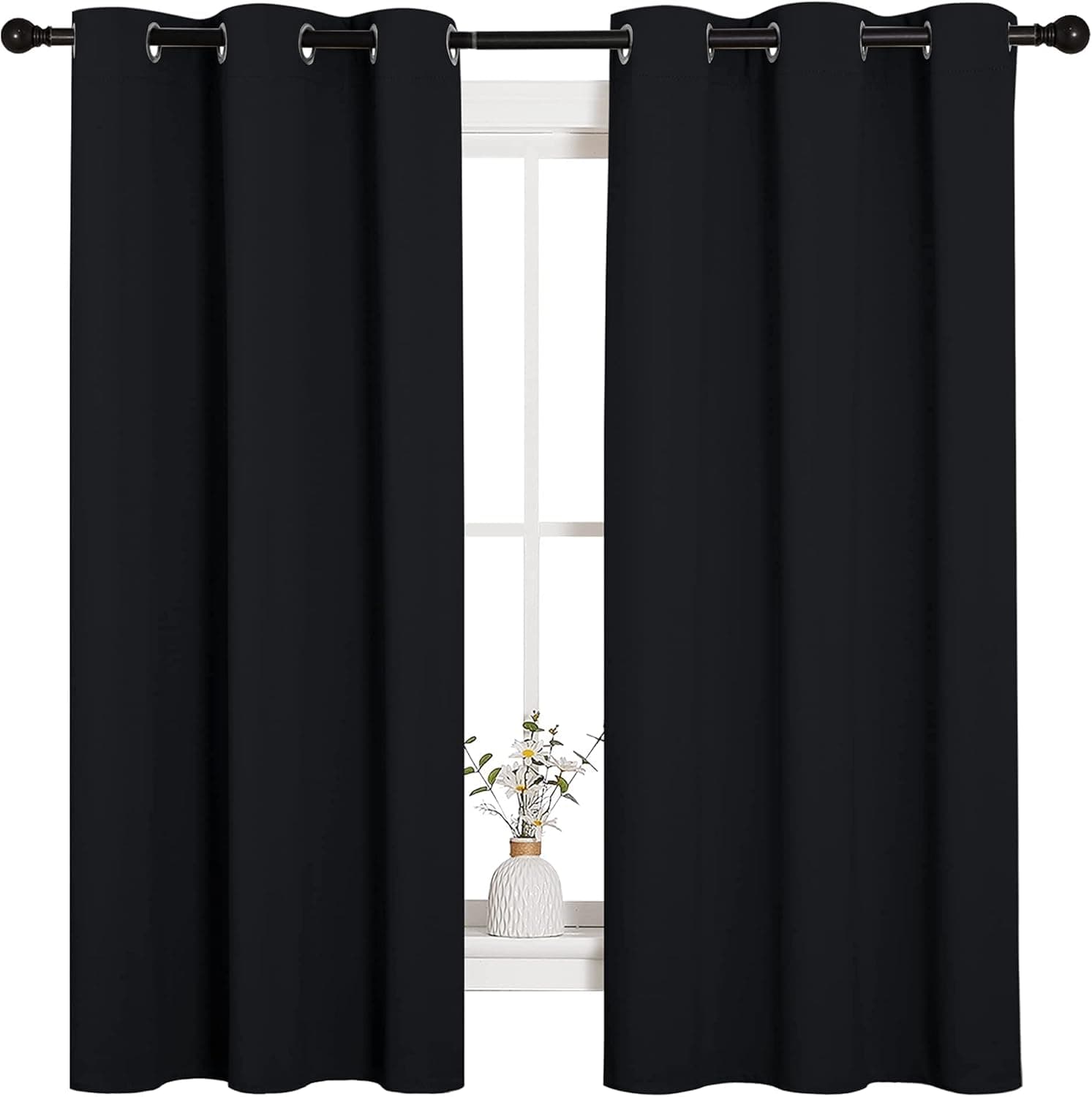
NICETOWN Blackout Curtains, 42 x 63 in
One of three 63 in panels here, and the only 63 in panel from NICETOWN.
Sixty-three inches is the shorter of the two drops this catalog carries, and it is the length that causes most of the trouble on this site. Sixty-three inches reaches the floor only if the rod sits about 63 in above it, which is below the top of most windows. Forty-two inches of panel width, solid color, grommet header.
- The listing states
- solid grommet thermal insulated drapes with noise reduction and room darkening, 2 panels.
- Best for
- A short window, or a rod set unusually low.
What works
- Forty-two inches per panel, which suits a narrow window.
- A solid grommet header, easy to draw.
- The listing says room darkening rather than only blackout.
- Two panels per order.
What does not
- Sixty-three inches will float above the floor on any normal rod height.
- Thermal and noise reduction are stated with no figures.
- Forty-two inches of flat panel gathers to well under 30 in of covered width.
Only stated pleat hardware
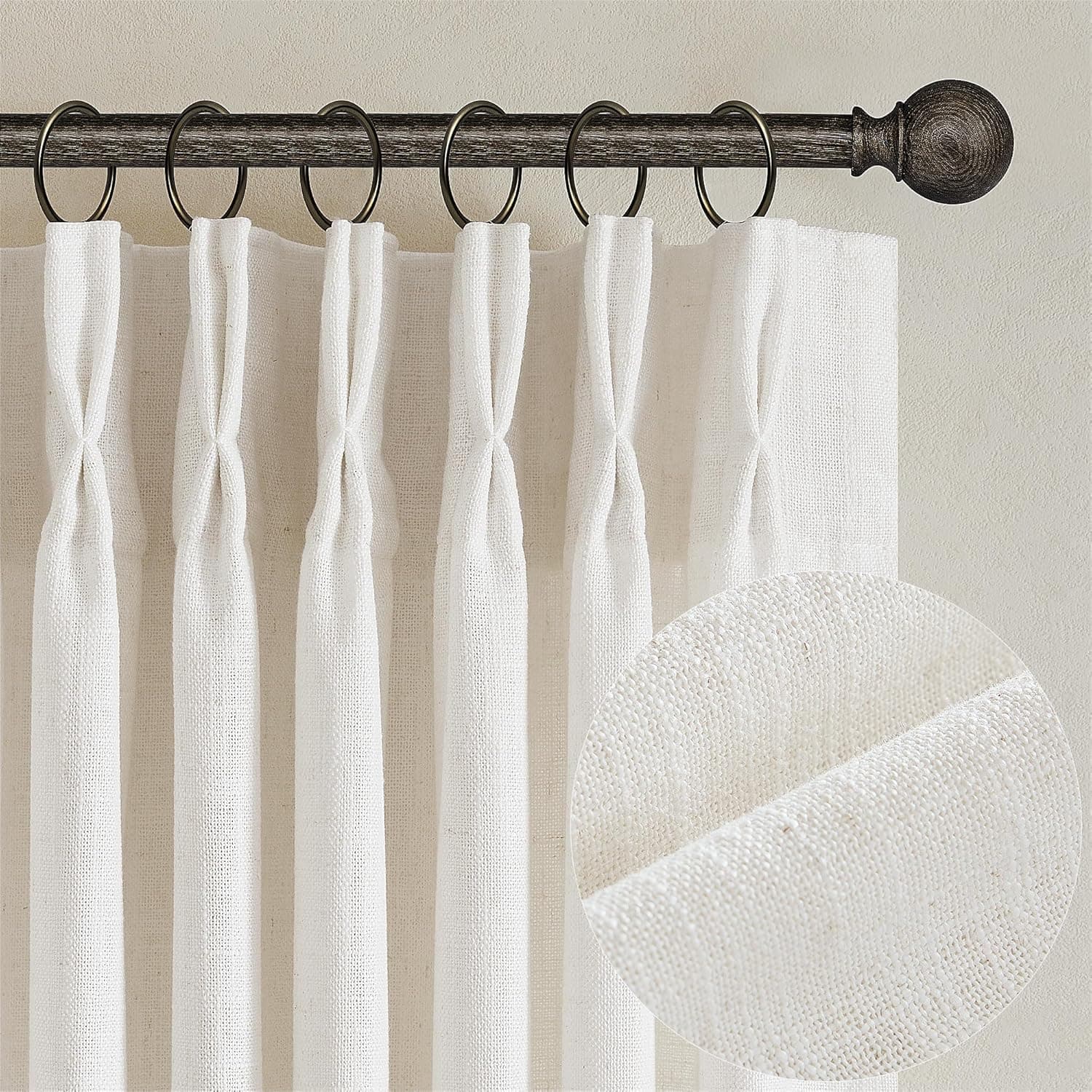
TWODRAPES Pinch Pleated Linen Curtains, 84 in
The only curtain listing here that states pinch pleat hooks and rings in the box.
The only panel in this catalog that comes with the hardware that makes a pinch pleat: hooks and rings. That is the difference between a header that looks pleated in a photograph and one that is held in pleats on the rod. Eighty-four inches, semi-sheer textured linen, two panels.
- The listing states
- semi sheer textured linen with pinch pleat hooks and rings, a back tab header and 2 panels.
- Best for
- A window where a real pleated header is wanted at 84 in.
What works
- Pinch pleat hooks and rings are stated, which no other listing here includes.
- Eighty-four inches of drop.
- A back tab header is also stated, so there are two ways to hang it.
- Textured linen holds a pleat better than a flat weave.
What does not
- No panel width is stated.
- Rings on a rod add height above the rod, which changes where the hem lands.
- Semi-sheer means it filters light rather than stopping it.
All 10 listings in this category: Curtain Panels
The Amazon links above are affiliate links, and a purchase made through one may earn us a commission. Nothing on this page was ranked, ordered or described differently because of that.
How this rule changes with the room
3 room shapes where this arithmetic lands somewhere different.
Sources for this page
3 sources, checked by opening each one.